

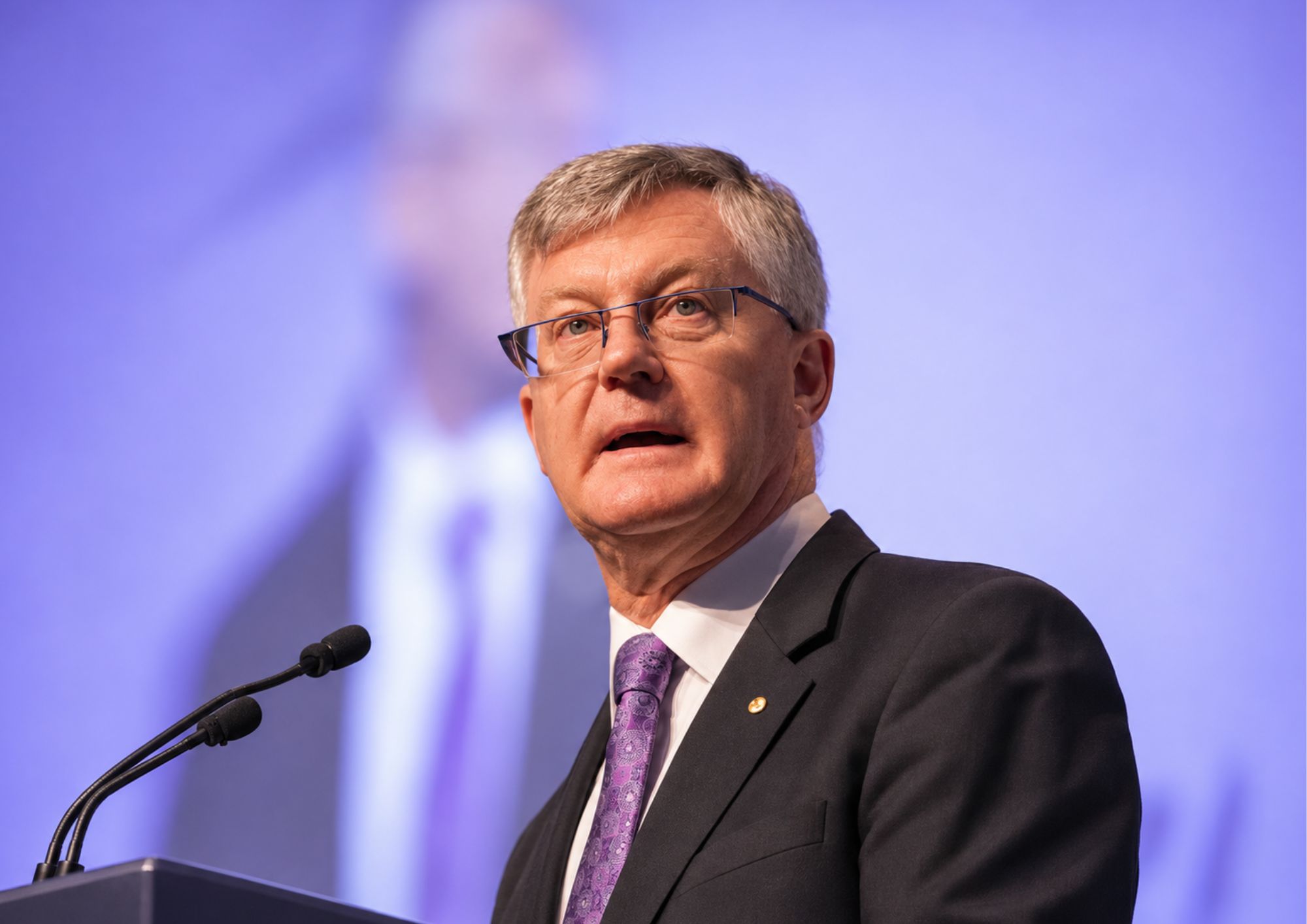
Martin Parkinson has called for a more clearly defined role for temporary visas in Australia’s immigration system. His proposals also address population planning and declining public confidence in the way migration is managed.
Former Australian Treasury secretary Martin Parkinson has proposed capping the temporary visa population or limiting the number of years individuals can spend on such visas. He maintains that restrictions should serve clear policy objectives rather than simply meet numerical targets.
The Macquarie University chancellor outlined his ideas at the Macquarie Business School’s Forum on Migration and Innovation on 25 November 2026. He previously chaired the Albanese government’s 2023 migration review, although his latest proposals do not represent official policy.
Clearer objectives for temporary visas
Each visa category, he argued, should have a defined function, an assessment of its demands on public services and clear accountability. Those that fail to fulfil their intended purpose should be reformed or closed.
He put the number of temporary visa holders in the country at nearly three million, including more than 400,000 on bridging visas. His estimate fell to around 1.8 million when New Zealand citizens and visitors were excluded.
Bridging visa backlog and permanent migration pathways
Years of underinvestment in immigration decision-making and review systems have prolonged uncertainty for bridging visa holders, according to Parkinson. He advocated clearing the backlog and accelerating decisions on who could settle permanently or would have to leave. His wider proposal did not specify a numerical ceiling, maximum duration or implementation timetable.
The debate also concerns how Australia manages the transition from temporary to permanent residence. According to ABC News, the country’s 2026–27 permanent migration programme provides 185,000 places, of which 129,590 are allocated to people already living in Australia.
Granting permanent residence to people already established in the country changes their immigration status without necessarily adding to immediate housing demand. Adjustments to visa allocations, therefore, do not translate directly into equivalent changes in net overseas migration.
Housing and international education shape the debate
Parkinson identified insufficient construction and other supply constraints as the primary causes of Australia’s housing crisis. Population growth, he acknowledged, intensifies competition for rental properties, especially among younger people and low-income households. His proposed response involves closer coordination between residential development, infrastructure investment and demographic planning, alongside dedicated student accommodation.
He estimated that international students account for around 5 per cent of the national private rental market, although the pressure on housing could be more pronounced in Sydney. A shortage of purpose-built accommodation can leave overseas students competing with other renters in areas where vacancies are already scarce.
The effectiveness of international education as a source of skilled labour also came under scrutiny. Parkinson questioned whether student recruitment and post-study opportunities were sufficiently aligned with employment outcomes, pointing to the mismatch between academic qualifications and the jobs some graduates ultimately secure.

Parkinson questioned whether international student recruitment and post-study work opportunities were sufficiently aligned with Australia’s labour market needs.
University funding formed another part of his analysis. He linked the sector’s reliance on overseas tuition fees to a shortfall in public funding, raising questions about whether its financial model supports Australia’s broader skills requirements.
Australia revised its English-language test requirements in August 2025, including those for student and temporary graduate visas. Those changes concern eligibility criteria rather than the population or duration limits Parkinson has proposed.
Reducing migration alone may not restore public confidence
Parkinson argued that the uneven distribution of migration’s benefits and costs had contributed to declining trust in the system. Reducing arrivals, in his view, would do little to restore public confidence unless governments also addressed the underlying pressures on communities.
He challenged political parties advocating lower immigration levels to explain the economic consequences of their plans. His concerns included potential labour shortages across industries and regions, as well as when communities could expect improvements in housing availability and essential services.
His renewed call for a National Migration Summit forms part of a longer-term response. The gathering would bring together governments, employers, unions, community organisations and specialists to establish a coordinated roadmap.
Any future restrictions could have varying implications for international students, overseas workers and people awaiting immigration decisions. The policy challenge would be to manage the overall scale of temporary migration while preserving pathways that serve legitimate educational and workforce needs.
Source: lighthouse.mq.edu.au, abc.net.au, immi.homeaffairs.gov.au