



In a global context marked by the saturation of traditional study destinations, rising education costs, and increasingly restrictive visa policies, a growing number of students and families are turning toward strategic alternatives. Among them, study in Egypt is emerging as a credible option at the intersection of education, geopolitics, and international mobility.
Long viewed primarily through the lens of its historical and cultural heritage, Egypt is now asserting itself as a regional education hub linking Africa, the Middle East, and Europe. Studying in Egypt is no longer merely an academic choice, but a long-term strategic decision.
Why “Study in Egypt” Is Gaining Growing Attention
The rising interest in study in Egypt reflects a broader transformation in global education dynamics. As migration restrictions tighten across many Western countries, students are seeking destinations that combine accessibility, academic credibility, and regional positioning.
Egypt offers:
- a long-established and structured university tradition;
- a growing number of programs taught in English;
- competitive tuition fees and living costs;
- a strategic geographic position connecting three continents.
For students from Africa, the Middle East, and emerging markets, Egypt represents a pragmatic yet ambitious alternative.

Study in Egypt: Overview of the Higher Education System
Egypt’s higher education system balances public universities, private institutions, and international campuses. In recent years, private universities often developed in partnership with foreign institutions have strengthened Egypt’s appeal to international students.
Key characteristics include:
- instruction in Arabic and English;
- strong academic disciplines in medicine, engineering, business, political science, and regional studies;
- gradual alignment with international academic standards.
This diversity allows students to build academic pathways aligned with their long-term objectives.
Study in Egypt for International Students: Who Is It For?
Study in Egypt is not a universal solution but is well-suited to specific profiles.
It is particularly relevant for:
- African students seeking recognized education within the region;
- Middle Eastern students looking for a culturally familiar academic environment;
- students interested in diplomacy, geopolitics, and international relations;
- families viewing education as a first step toward broader international exposure.
Egypt positions itself as a complementary destination rather than a direct competitor to Western education systems.
The Strategic Value of Study in Egypt in a Global Mobility Context
From an international mobility perspective, study in Egypt can serve as a strategic base. Education in Egypt enables students to acquire academic qualifications, regional knowledge, and international exposure before pursuing opportunities elsewhere.
This positioning offers:
- access to regional networks across Africa and the Middle East;
- academic preparation for further studies abroad;
- proximity to international institutions operating locally.
For families with long-term vision, education becomes a tool for structuring future mobility.

Study in Egypt and Immigration: Key Considerations
It is essential to clearly distinguish education from immigration. Studying in Egypt does not automatically lead to permanent residency or citizenship.
However, the student visa allows:
- legal residence for the duration of studies;
- administrative stability;
- time to prepare future international projects.
When integrated into a broader strategy, study in Egypt can support mobility planning without replacing formal immigration pathways.
Cost of Living and Education in Egypt: A Realistic Perspective
Financial accessibility is a notable advantage of study in Egypt, but it should not be the sole decision factor.
Students should also consider:
- international recognition of degrees;
- language of instruction;
- quality of infrastructure and academic support.
A balanced assessment ensures a sustainable and informed decision.
Challenges to Anticipate Before Choosing Study in Egypt
An informed choice also requires anticipating certain challenges:
- cultural and administrative adaptation;
- potential language barriers;
- varying recognition of degrees across countries.
These factors are not obstacles but elements to integrate into strategic planning.
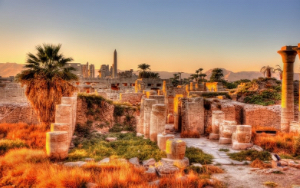
Study in Egypt: A Lever in a Long-Term Educational and Mobility Strategy
At The Immigration Magazine, education is viewed as a strategic lever. Study in Egypt can play a key role in an international education trajectory by preparing students for structured and forward-looking mobility.
In an increasingly multipolar world, strategic educational choices are becoming decisive.
Conclusion: Beyond Study in Egypt
Shifting global balances are redefining education destinations. Study in Egypt exemplifies this transformation, offering a combination of education, regional positioning, and strategic vision.
For students and families ready to move beyond traditional pathways, Egypt represents not just a place to study but a foundation for the future.