

The global landscape for private wealth management and cross-border mobility has entered a phase of heightened regulatory volatility. Major traditional jurisdictions for high-net-worth individuals (HNWIs) and family offices have restructured or phased out key preferential tax frameworks, most notably the complete abolition of the UK’s non-domiciled regime and substantial tax hikes across alternative European residency programs.
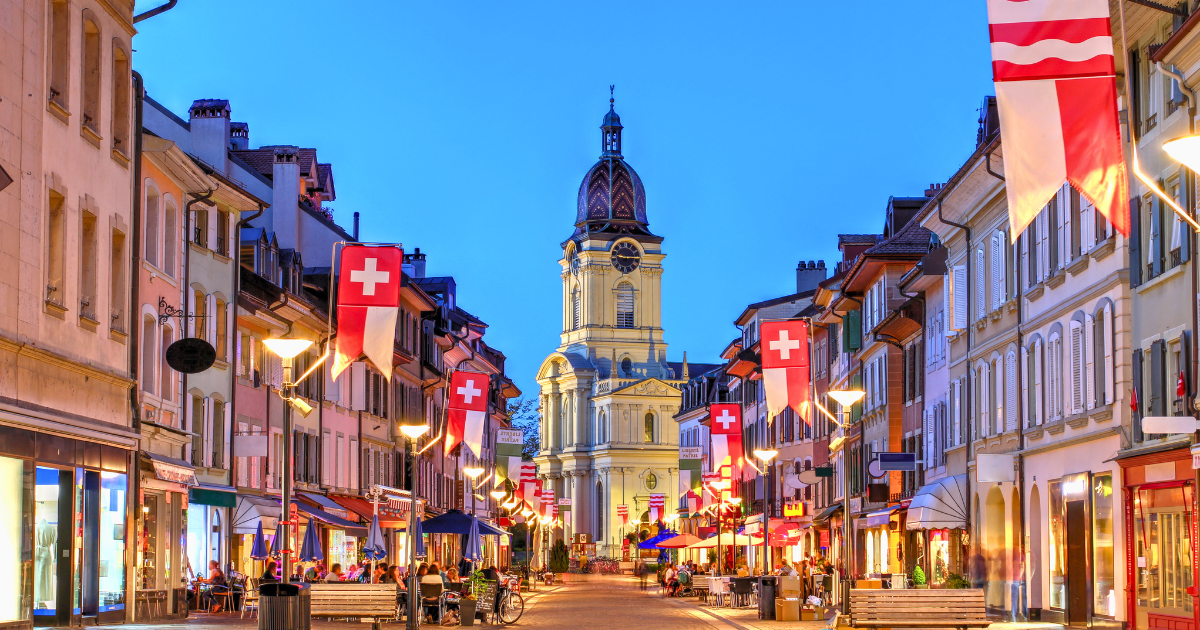
Amid these international shifts, one jurisdiction maintains its position as the world’s premier anchor for Ultra-High-Net-Worth Individuals (UHNWIs): Switzerland.
Rather than relying on short-term promotional visas, Switzerland’s enduring appeal rests on a multi-century infrastructure of direct democracy, monetary stability, physical security, and a predictable fiscal system.
This report provides an institutional analysis of the macroeconomic drivers, tax structures, and geopolitical safeguards that continue to draw global ultra-wealthy families to Switzerland.
1. The Fiscal Anchor: Swiss Expenditure-Based Taxation (Forfait Fiscal)
While many European nations have recently altered their flat-tax regimes, Switzerland’s expenditure-based taxation framework (forfait fiscal) remains a stable, legally codified option across 19 of its 26 cantons.
How Lump-Sum Taxation Operates
Under Article 14 of the Federal Direct Tax Act (DBG), qualifying non-Swiss foreign nationals taking up tax residency for the first time, or returning after a 10-year absence, can negotiate a lump-sum tax ruling with cantonal tax authorities.
Instead of taxing global income or total asset portfolios, the Swiss tax base is calculated based on the applicant’s worldwide annual living expenses in Switzerland.
Core Qualification Parameters
- No Local Gainful Activity: The primary taxpayer (and spouse) cannot engage in active employment or commercial operations inside Switzerland, though managing personal foreign assets and global corporate entities from a Swiss base is fully authorized.
- The Control Calculation (Kontrollrechnung): To ensure fiscal integrity, the final tax paid under the agreed expenditure base must not be lower than the ordinary Swiss tax calculated on Swiss-sourced income (e.g., Swiss real estate, dividends from Swiss equities) plus foreign income for which double taxation treaty relief is claimed.
For ultra-wealthy global investors with substantial offshore dividends, capital gains, or corporate distributions, this expenditure-based model provides unmatched fiscal predictability while insulating global balance sheets from progressive local income taxes.

2. Geopolitical Insulation & Sovereign Risk Mitigation
For UHNWIs managing multi-generational asset allocation, tax efficiency is often secondary to sovereign risk mitigation. Switzerland offers a level of political and legal stability that remains unmatched in modern international relations.
- Direct Democracy & Policy Stability: Switzerland’s decentralized federal structure and system of direct democracy prevent sudden, sweeping legal or fiscal overhauls. Major policy shifts require extensive cantonal consultation and public referendums, giving family offices exceptional visibility over multi-decade planning horizons.
- Currency Strength & Inflation Protection: The Swiss Franc (CHF) serves as one of the world’s premier safe-haven currencies, consistently outperforming major fiat currencies in purchasing-power preservation and shielding wealth against global inflationary cycles.
- Neutrality & Legal Certainty: Independent of the European Union, Switzerland maintains autonomous legal sovereignty, rigorous asset ownership protections, and a transparent judiciary, insulating global wealth from arbitrary enforcement or cross-border political disputes.
3. Cantonal Competition & Customized Wealth Infrastructure
Switzerland does not operate as a monolithic tax environment; instead, its 26 cantons actively engage in fiscal competition to attract foreign capital.
Selecting the Optimal Canton
While cantons like Zurich and Basel-Stadt have abolished lump-sum taxation at the cantonal level, key cantons in Central, Western, and Southern Switzerland continue to offer highly attractive environments:
- Central Switzerland (e.g., Zug, Schwyz, Nidwalden): Highly favored by active entrepreneurs and tech executives for their exceptionally low ordinary corporate and personal tax rates, alongside efficient cantonal administrations.
- Western Switzerland (e.g., Vaud, Geneva, Valais): Preferred by legacy global families seeking established luxury lifestyle infrastructure, international private schools, and proximity to Geneva’s private banking hub.
- Southern Switzerland (Ticino): Offers a favorable Mediterranean climate paired with competitive cantonal expenditure thresholds and proximity to Milan’s industrial core.
4. World-Class Ecosystem for Private Banking and Family Offices

Relocating to Switzerland provides UHNWIs with immediate proximity to the world’s densest concentration of private wealth management expertise.
- Institutional Private Banking: Swiss private banks manage a significant share of the world’s cross-border private wealth. Investors benefit from deep capital markets, sophisticated Lombard lending structures, and multi-currency portfolio management.
- Single & Multi-Family Office Ecosystem: Switzerland provides a mature legal and professional environment for establishing Single Family Offices (SFOs). Local access to world-class wealth planning attorneys, top-tier audit firms, and specialized trust managers enables seamless multi-generational estate planning.
- Physical Security & Anonymity: Beyond financial capital, Switzerland offers UHNWIs unmatched personal security, high-end healthcare infrastructure, discretionary living conditions, and premium real estate assets in world-renowned Alpine regions.
Conclusion: The Premier Standard for Multi-Generational Wealth
The continued attraction of Switzerland for Ultra-HNWIs demonstrates that while global mobility programs come and go, long-term jurisdictional resilience is built on institutional strength. Rather than competing on low-cost entry thresholds, Switzerland offers a sophisticated, highly regulated ecosystem where legal certainty, monetary strength, and operational transparency justify the higher cost of establishment.
For global family offices and international entrepreneurs, taking up Swiss residence through expenditure-based taxation or ordinary cantonal relocation may form part of a broader jurisdictional diversification strategy. By anchoring a family’s primary domicile in Switzerland, global investors secure an insulated, legally sound, and world-class base designed to preserve wealth across generations.