

In 2026, global investors are thinking far beyond simple financial returns. Questions about taxation, residency, mobility, and long-term positioning have become just as vital as the performance of the investment itself. As countries compete to attract internationally mobile capital and talent, three jurisdictions have taken center stage: Turkey, the United Arab Emirates (UAE), and Italy.
Each of these nations offers a fundamentally different vision of fiscal life. Whether you are an entrepreneur building a global empire, a high-net-worth individual protecting a legacy, or a remote professional seeking lifestyle and access, choosing the right “fiscal home” is now a high-stakes strategic decision.
1. Why Tax Residency Matters More in 2026
For decades, tax planning was primarily about finding the lowest possible rate. Today, the conversation is broader and more complex. In 2026, global investors are evaluating a multi-dimensional “Success Matrix”:
- Predictability: Will the rules change after I move?
- Mobility: Does this residency grant me access to key global markets?
- Compliance: How does this jurisdiction handle international reporting (CRS) and the 15% Global Minimum Tax?
- Lifestyle: Does the quality of life match the fiscal savings?
This shift has transformed tax residency from a mere financial calculation into a holistic life strategy.

2. Turkey: The Emerging "Game-Changer"
Turkey is the “wildcard” of 2026. Long known for its Citizenship by Investment (CBI) program, the Turkish government shocked the market in April 2026 with the “Strong Investment Hub Program.”
- The Strategic Proposal: Turkey has proposed a 20-year tax exemption on all foreign-sourced income for new residents. If you have not been a tax resident in Turkey for the last three years, you could potentially pay 0% tax on your global dividends, interest, and rental income for two decades.
- Corporate Incentives: The reform package includes cutting corporate tax for manufacturer-exporters to 9% and offering near 0% effective tax for companies operating within the Istanbul Financial Center (IFC) involved in transit trade.
- The Caveat: It is crucial to remember that as of mid-2026, many of these measures are legislative proposals awaiting final parliamentary approval. While the direction is clear, the exact legal details are still being refined.
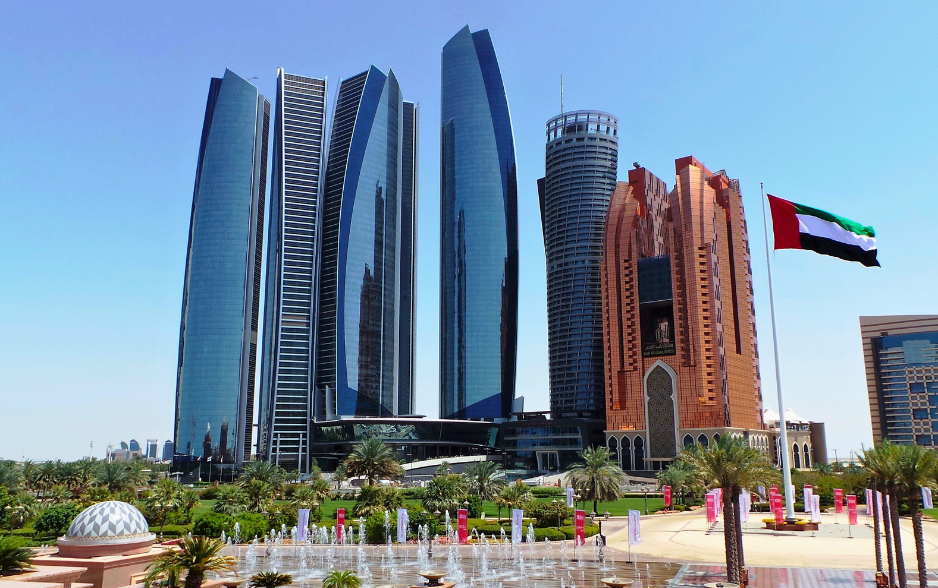
3. UAE: The Efficiency Leader and Zero-Tax Hub
The UAE remains the world’s most recognized hub for tax efficiency. In 2026, Dubai and Abu Dhabi have evolved from “tax-free” zones into sophisticated, compliant financial centers.
- Personal Income: The UAE maintains its legendary 0% personal income tax on both local and foreign-sourced income (including salaries and investments).
- Corporate Tax Evolution: Since 2023, the UAE has implemented a 9% corporate tax on profits exceeding AED 375,000 (~$102,000). In 2026, the focus has shifted toward strict enforcement and compliance, ensuring that companies are properly registered and audited even if they qualify for 0% rates in Free Zones.
- Operational Excellence: For entrepreneurs, the UAE offers an unmatched ecosystem of “Free Zones,” world-class digital infrastructure, and a 10-year Golden Visa that provides genuine long-term stability.
4. Italy: The Model of Predictability and Luxury

Italy offers a completely different philosophy: the “Neo-Domiciled” regime. Instead of zero tax, Italy offers absolute predictability.
- The €300,000 Flat Tax: In a significant move for 2026, Italy raised its annual flat tax for new residents from €200,000 to €300,000.
- The Deal: For this fixed annual fee, an individual is exempt from all Italian taxes on their foreign-sourced income, regardless of the amount. If you earn €10 million or €100 million outside Italy, your bill remains €300,000.
- European Access: Italy’s greatest advantage is its Schengen access and the “Dolce Vita” lifestyle. It is the preferred choice for families who want to be integrated into the heart of Europe while capping their tax exposure.
5. The Head-to-Head Comparison (2026)
Feature | Turkey (Proposed) | UAE | Italy |
Foreign Income Tax | 0% (for 20 years) | 0% (Permanent) | €300,000 (Fixed Lump-Sum) |
Duration | 20 Years | Permanent | 15 Years |
Standard Corporate Tax | 25% (9-14% for exporters) | 9% (Above AED 375k) | 24% |
Path to Passport | CBI ($400k Investment) | Exceptional merit/Long-term | Naturalization (10 years) |
Primary Appeal | Low entry barrier + Passport | Business efficiency + 0% tax | EU access + Predictability |
6. Which Strategy Fits You?
Choosing between these three powerhouses depends entirely on your Investor Profile:
- The “Global Scale” Entrepreneur (UAE): If you are building a multinational business and value operational efficiency, the UAE’s 0% personal tax and 9% corporate rate is the gold standard.
- The “Plan B” Strategist (Turkey): If you want to pair a second passport with a potentially aggressive 20-year tax holiday on foreign wealth, Turkey’s emerging framework is the one to watch.
- The “Ultra-Wealthy” Family (Italy): If you have very high global income and want the stability of an EU member state with a capped, predictable tax bill, Italy’s €300,000 flat tax is the ultimate luxury.
The Global Trend: Attracting the Investor, Not Just the Capital
The larger story of 2026 is not about any single country. It is about Global Competition. Countries increasingly understand that attracting investors means attracting talent, management centers, and long-term economic networks. As a result, tax residency programs are becoming more sophisticated. They are no longer “back-door” deals; they are front-facing national strategies designed to attract the world’s most valuable residents.
Final Thoughts
Turkey, the UAE, and Italy each represent a different vision of your future. One focuses on emerging incentives, one on operational efficiency, and one on predictability and European access. As we navigate the complexities of 2026, remember: the “best” tax strategy isn’t just about the lowest number. It is about where your capital, your family, and your lifestyle find the most sustainable alignment.
Follow us on social media and website for more insights!