


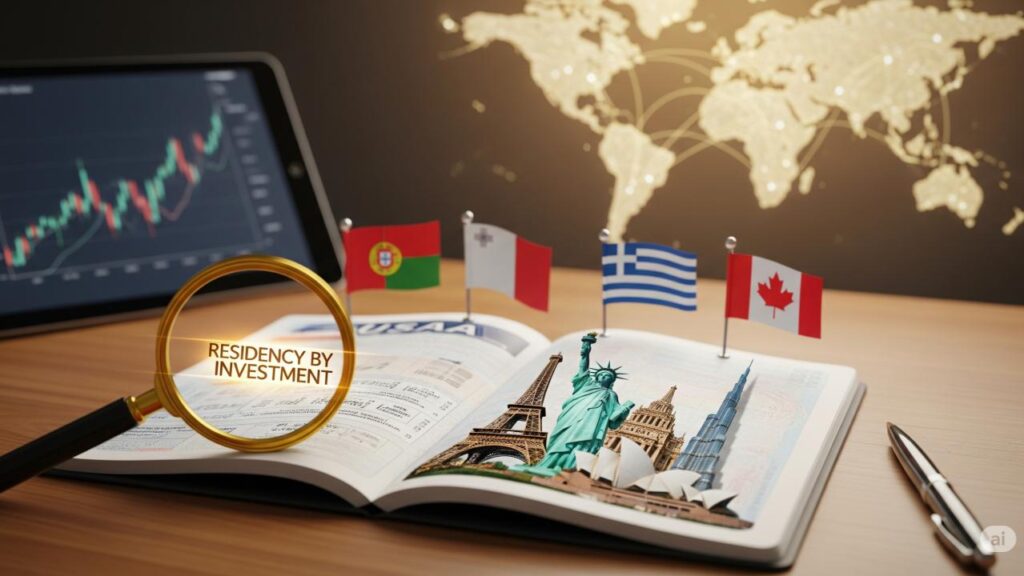
For many governments, attracting Foreign Direct Investment (FDI) is the ultimate economic goal. To win this capital, they offer one of the most valuable assets in the world: Residency. This is the foundation of Residency-by-Investment (RBI) programs, often called “Golden Visas.”
But how exactly does a business investment turn into a residency permit? In this guide, The Immigration Magazine explains the strategic link between the capital you invest and the new life you build.
What Is FDI?
Foreign Direct Investment, commonly known as FDI, refers to capital invested into a business, project, or economic activity in another country.
Unlike passive investments, FDI usually involves a longer-term commitment and a more direct economic impact.
1. FDI: The "Gasoline" in the Residency Engine
At its simplest, FDI is when an individual or company from one country invests in a business or project in another. Governments love FDI because it is “sticky” capital, it stays in the country, builds infrastructure, and creates jobs.
Because FDI is so beneficial, countries create RBI programs as a reward system. They say to the investor: “If you help us grow our economy with your capital (FDI), we will give you the right to live, work, and study here (Residency).”

2. Three Ways FDI Drives Residency Programs
Governments don’t just want any money; they want investment that makes a difference. Here are the three main ways FDI is structured to grant residency:
A. Job Creation (The Social Impact)
Many countries, such as the USA (EB-5 program) or Germany, prioritize FDI that creates at least 10 full-time jobs for local citizens. By investing in a business that hires locals, you are solving a key social problem for the government, which in turn fast-tracks your residency.
B. Real Estate & Infrastructure (The Physical Growth)
In 2026, countries like Greece, Spain, and the UAE continue to use FDI in real estate to drive their residency programs. When you buy a property or invest in a commercial development, you are injecting liquidity into the local construction and tourism sectors.
C. Innovation & Technology (The Future Move)
Strategic nations are now shifting their RBI programs toward “High-Tech FDI.” If you invest in a local startup, an AI lab, or a green energy project, governments often reduce the investment threshold because your “Knowledge Capital” is seen as more valuable than just cash.
3. The Shift in 2026: From Passive to Productive
The biggest trend we see at The Immigration Magazine this year is the move away from “passive” investment.
In the past, you could simply put money in a bank account to get residency. Today, governments are demanding active FDI. They want to see that your money is working. This is why programs are increasingly requiring:
- Proof of business activity.
- Annual audits of the invested project.
- A clear “Economic Contribution” statement.
4. Why This is a Win-Win Strategy
The link between FDI and Residency is a perfect partnership:
- For the Country: They receive stable capital, new technology, and increased tax revenue without taking on debt.
- For the Investor: You receive a “Plan B” residency, asset diversification in a stable currency, and access to new markets for your business.
5. Strategic Advice: Look for the "Value Gap"
When choosing an RBI program driven by FDI, don’t just look for the cheapest option. Look for the country that has a “Value Gap” in a sector you understand.
- If you are in tech, look at Portugal’s startup-focused pathways.
- If you are in manufacturing, look at Turkey or Vietnam’s investor visas.
Investing in a sector that the government is desperate to grow makes your residency application much stronger and your investment more likely to stay profitable.
Conclusion: Your Capital is Your Passport
In the modern world, your wealth is more than just a number, it is a tool for mobility. By understanding how FDI drives Residency-by-Investment, you can stop being just a “foreign investor” and start being a “Global Citizen.”
The world is competing for your capital. In 2026, the question isn’t just where you can invest, but where that investment can take you.
Follow us on social media and website for more insights!